Black Myth: Wukong's Dominance Two Years Later: How a Chinese Legend Conquered the World
Black Myth: Wukong, an action RPG by Game Science, achieved $880M Steam revenue and global acclaim, redefining Chinese gaming success.
There are games that launch, make a splash, and then fade away quietly. And then there are those rare beasts like Black Myth: Wukong that refuse to leave the spotlight even years after release. I still remember the electric buzz of August 2024, when Game Science finally launched their long-awaited action RPG. Now, in 2026, I find myself looking back at those early numbers with a sense of awe – and a question: how on earth did a single-player title from a relatively unknown Chinese studio manage to pull in over $880 million in gross revenue on Steam alone within its first few weeks?
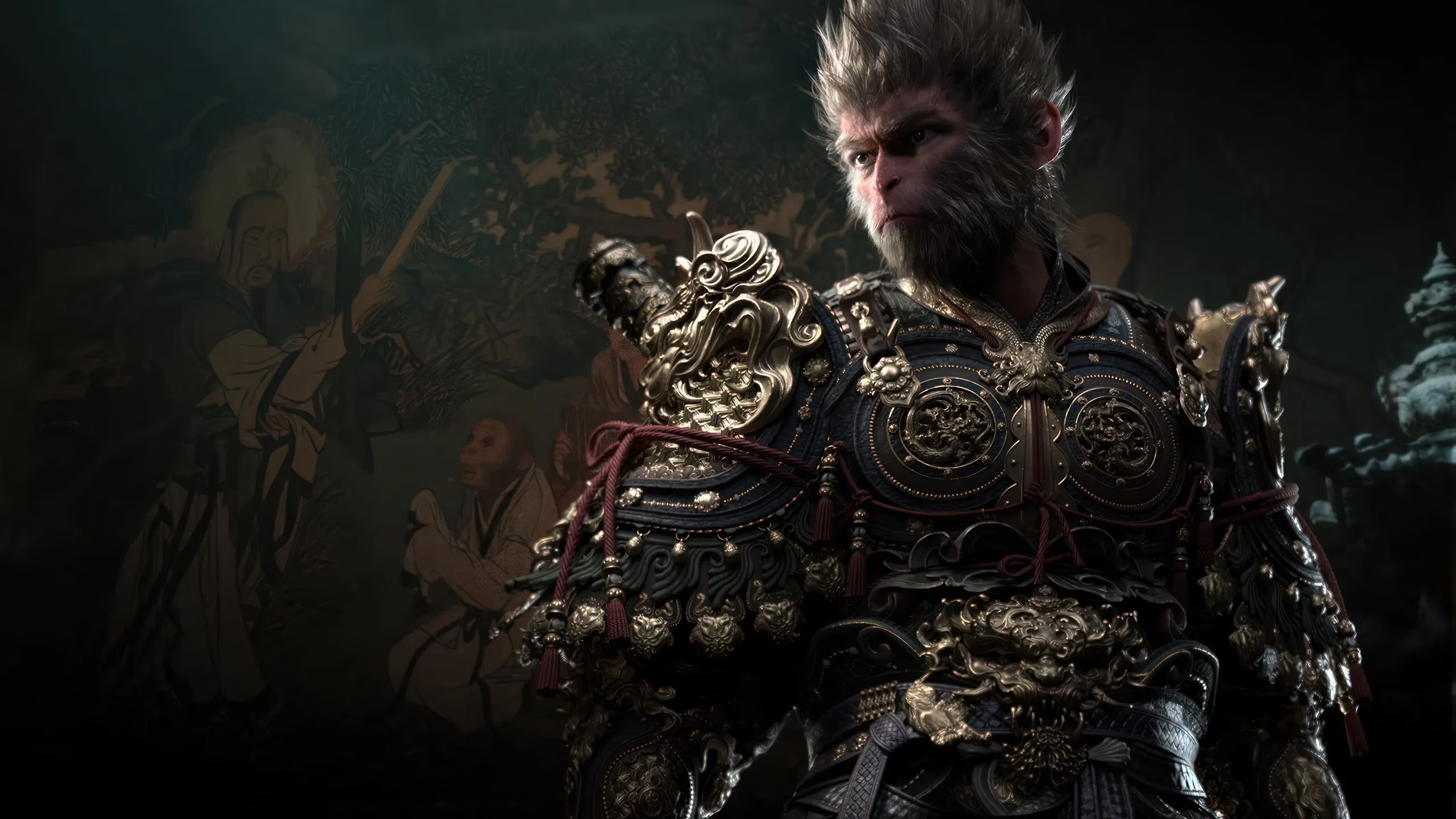
Let me take you back to that incredible debut. According to data aggregates like VG Insights, in the span of just a couple of weeks after launch on August 20, 2024, Black Myth: Wukong sold more than 18 million copies on Steam. That's not a typo – 18 million copies. The gross revenue figure was soaring past $880 million, inching dangerously close to that magical one-billion-dollar mark while many of us were still struggling with the Whiteclad Noble. It was clear that something extraordinary was happening, but the demographic breakdown truly told the story of a cultural phenomenon. An estimated 76% of all players came from China, while only about 6% were from the United States. Did this massive domestic support mean the game was merely a regional hit that would never truly crack the global mainstream? Back then, many skeptics thought so. But they've been proven delightfully wrong.
Two years on, the picture is far more balanced, although the Chinese heartland remains its strongest base. The initial imbalance actually became the game's secret weapon – it proved that there was an enormous hunger for high-quality, culturally rich triple-A games coming out of China, which in turn piqued worldwide curiosity. Fast forward to today, and my friend group in London, Tokyo, and São Paulo all have their own tales of struggling against Erlang Shen. Black Myth: Wukong’s concurrent player numbers on Steam have understandably fallen from the staggering 645,000 simultaneous players recorded just two weeks after launch, but even now, in 2026, it easily maintains a healthy average of 30,000 to 50,000 concurrent players on an ordinary weekend. Not bad for a linear, story-driven title that's already seen most players roll credits multiple times.
So, what happened between 2024 and now? Did Game Science rest on their laurels, or did they deliver on those tantalizing hints of DLC and a sequel? I’m thrilled to report the latter. After months of radio silence, the studio dropped the “Echoes of the Celestial Court” expansion in late 2025, a meaty 15-hour journey that delved into the monkey king’s suppressed memories and introduced the infamous Nine-Tailed Fox as a boss. The DLC was a critical and commercial hit, pushing total franchise revenue past the $1.5 billion milestone and winning multiple Best Ongoing Game awards – an unusual but fitting accolade for an expansion. My Twitter feed was an endless scroll of jaw-dropping photomode captures for weeks. It proved that the initial $880 million wasn't a fluke; it was the foundation of a lasting legacy.
And what about that sequel? Well, I can’t spill all the beans just yet, but let’s just say that job listings for Game Science have been very interesting reading over the past year. Positions for open-world designers and writers well-versed in the entire Journey to the West corpus strongly hint that Black Myth: Wukong 2, or perhaps an entirely new legend within that universe, is in active development. Given the studio’s perfectionist track record, I'm not expecting it before 2028, but the mere prospect has the community buzzing all over again.
It's important to recognize why Black Myth: Wukong's performance data remains so compelling. The average playtime back in 2024 floated around 31.9 hours – a figure that suggested players weren't just buying the game; they were finishing it. In an era where many $70 titles struggle to achieve a 30% completion rate, Wukong’s engagement was phenomenal. That deep investment comes from how unapologetically Chinese the game is. It doesn't explain its mythology for a western audience; it throws you into a world of yaoguai, golden cudgels, and dripping immortal peaches, trusting you to keep up. And keep up we did. I remember dying to the Yellow Wind Sage more times than I’d care to admit and yet never feeling frustrated enough to quit. That tells you everything about the game’s design chops.
But let's confront a slightly uncomfortable question: would Black Myth: Wukong have been equally successful without the colossal domestic backing? The 76% China player base statistic was a double-edged sword. Some analysts initially argued that the game might not have the global appeal of, say, an Elden Ring. However, I'd argue this viewpoint misses the point entirely. By serving its home audience with such fierce authenticity, Black Myth: Wukong created an exportable cultural force. International players like me weren't just playing a game; we were getting an interactive crash course in a classic 16th-century novel. This wasn't a title that dumped its cultural identity to chase a broader market – it dragged the broader market into its world, and we loved it.
From a pure business standpoint, the trajectory from $880 million on Steam to what the IP is worth today is staggering. The game’s success has opened doors for other Chinese developers, leading to a kind of renaissance we're currently witnessing in 2026. Titles like “Phantom Blade Zero” and “Lost Soul Aside” are being viewed with a new kind of seriousness, and I can't help but think Black Myth: Wukong kicked that door wide open. The game proved that a single-player experience, without any microtransactions, live-service nonsense, or battle passes, could rake in near a billion dollars in a matter of weeks. It’s the kind of validation that every single one of my gamer friends cheers for.
So, have you played Black Myth: Wukong yet? If not, what are you waiting for? The original game has never been cheaper, and the definitive edition bundled with “Echoes of the Celestial Court” is an absolute steal. I’m already planning my third playthrough, a fresh run before any sequel announcement inevitably shatters the internet. Two years on, the monkey king hasn’t just survived; he’s still jumping into his cloud and leaving the rest of the industry chasing his dust. And honestly? I wouldn’t have it any other way.
Market context is informed by Entertainment Software Association (ESA), whose industry reporting helps frame why a premium, single-player release like Black Myth: Wukong could translate huge early demand into sustained momentum—highlighting how broad player engagement, platform reach, and shifting global consumption habits can amplify standout launches beyond their home markets.
Leave a Comment