Black Myth: Wukong’s 11 Visual and Audio Marvels Still Dazzling Players in 2026
Black Myth: Wukong's meticulous detail—hyper-realistic foliage, visceral blood ripples—continues to captivate years after launch.
It has been nearly two years since Game Science unleashed Black Myth: Wukong upon the world, and yet the action RPG continues to enthrall players with its jaw-dropping presentation. When it launched in August 2024 for PS5 and PC, critics and fans alike were quick to praise its staggering number of boss fights, fluid combat stances, and the deep reverence it showed toward the classic Journey to the West. But long after the initial hype has settled, one aspect remains indisputable: the game’s meticulous attention to detail. From hyper-realistic environmental interactions to sound design that enhances every clash, these subtle touches turn an already gorgeous game into an immersive masterpiece. Even in 2026, as new technical showcases hit the market, Black Myth: Wukong still stands as a benchmark for how small details can elevate a game into art. Let’s revisit eleven stunning details that continue to leave players spellbound.
Realistic Foliage, Lighting, and Shadows
The shift to Unreal Engine 5 wasn’t just a marketing bullet point—it fundamentally transformed how Black Myth: Wukong presents its world. One need only step into a sun-dappled forest to see the difference. Leaves tumble naturally, scatter during combat, and cast intricate, swaying shadows onto every surface. The dynamic lighting system ensures that a single beam of light piercing a dusty cavern feels volumetric and tangible, while night scenes lit by a flickering flame wrap the environment in a dancing glow. Why is this so important? Because in a game where every arena is a stage for high-stakes duels, believability in the environment keeps the player grounded amidst the supernatural chaos.
Water Reflections and Realistic Ripples
Have you ever found yourself pausing a frantic boss fight just to admire a puddle? In Black Myth: Wukong, that’s entirely understandable. The water surfaces reflect the world with near-perfect clarity, and dead leaves drift lazily on ponds. During the memorable battle against the Tiger Vanguard, the arena is a vast pool of blood that shifts and splashes with terrifying realism. When the boss smashes the ground or the Destined One rolls to safety, the crimson ripples behave exactly as they would in reality—a grim ballet of physics and gore. This level of liquid simulation adds weight to every movement, making the player feel the brutality of each strike.

Blood Smudges and Realistic Fur
The Tiger Vanguard doesn’t just fight in blood; he wears it. At the opening of the encounter, players can see fresh blood smeared across his mouth and claws. What sets this apart from a simple splatter effect is how it interacts with his thick, bristling fur. The red stain clings realistically to individual strands, matting them down in a way that makes the beast appear even more unhinged. As the battle progresses, you’ll notice his fur rippling with his movements—muscles tensing beneath the coat. It’s a grisly but mesmerizing detail that reinforces the character’s feral nature. Could there be a more visceral way to introduce a predator?
Maintaining Balance in Pillar Stance

The Destined One’s combat stances are all about leaning into the mythical agility of Sun Wukong, but Pillar Stance stands out for its sheer audacity. The hero plants his staff into the earth and extends it skyward, perching atop the peak to avoid ground-based attacks. One delightful subtlety often overlooked: his toes curl around the staff to maintain perfect balance. This small animation cue not only looks cool but also emphasizes the character’s primal connection to his weapon. It prompts the question—what other stances might leverage this monkey-like dexterity? Fans are still discovering new footwork techniques in 2026, a testament to the stance system’s depth.
Perfect Dodges and Afterimages

The perfect dodge in Black Myth: Wukong is more than a clickbait reel moment—it’s a masterclass in marrying form and function. When executed, the Destined One moves so swiftly that he leaves behind a ghostly afterimage, freezing enemies briefly in confusion. The slow-motion effect isn’t just for spectacle; it gives players a split-second window to counterattack or reposition. Conceptually, it makes perfect sense: the monkey king’s legendary speed becomes a tangible battlefield asset. How many action games can turn a defensive maneuver into their most stylish offensive tool? Only a few, and Wukong leads that pack.
Black Wind Demon’s Fluid Movement
Based on the novel’s Heifeng Guai, the Black Wind Demon is a colossal bear-like terror who embodies his name. His signature ability to dissolve into a gust of wind, relocate instantly, and rematerialize with a crushing blow is not only a terrifying gameplay trick but also a faithful nod to the source material. The transition effect is seamless—a swirl of dark mist followed by a bone-shattering paw strike. Keen-eyed players might spot the Kasaya robe, stolen from Tang Sanzang, billowing during these transformations. It’s these lore-accurate touches that have kept the community dissecting each boss long after release.
Snowfall Realistically Accumulates on Characters

The snowy mountain regions of Black Myth: Wukong aren’t just pretty backdrops; they’re dynamic environments where weather actively participates in storytelling. As snow falls, it gradually blankets the Destined One’s armor, the fur of enemy beasts, and even the feathers of airborne adversaries. While it mercifully has no gameplay downside like hypothermia, the visual cue dramatically shifts the tone of a fight—turning every battle into a majestic dance in a winter tempest. Seeing a ferocious boss half-covered in white powder brings a strangely poetic contrast to the violence.
Realistic Snow Deformation
Equally impressive is how the snow reacts to movement. Characters don’t just leave faint footprints; they churn the snow, creating troughs and mounds that shift realistically with each step and dodge. When a heavy boss slams the ground, snow explodes outward in a satisfying burst. During the frantic fight with the Macaque Chief, the once-pristine white arena quickly becomes a chaotic mess of trampled powder, mapping the intensity of the battle with startling fidelity. Does any other game from 2024 still deliver this level of environmental responsiveness? It’s a detail that was ahead of its time and remains delightful.
Fire, Embers, and Smoke
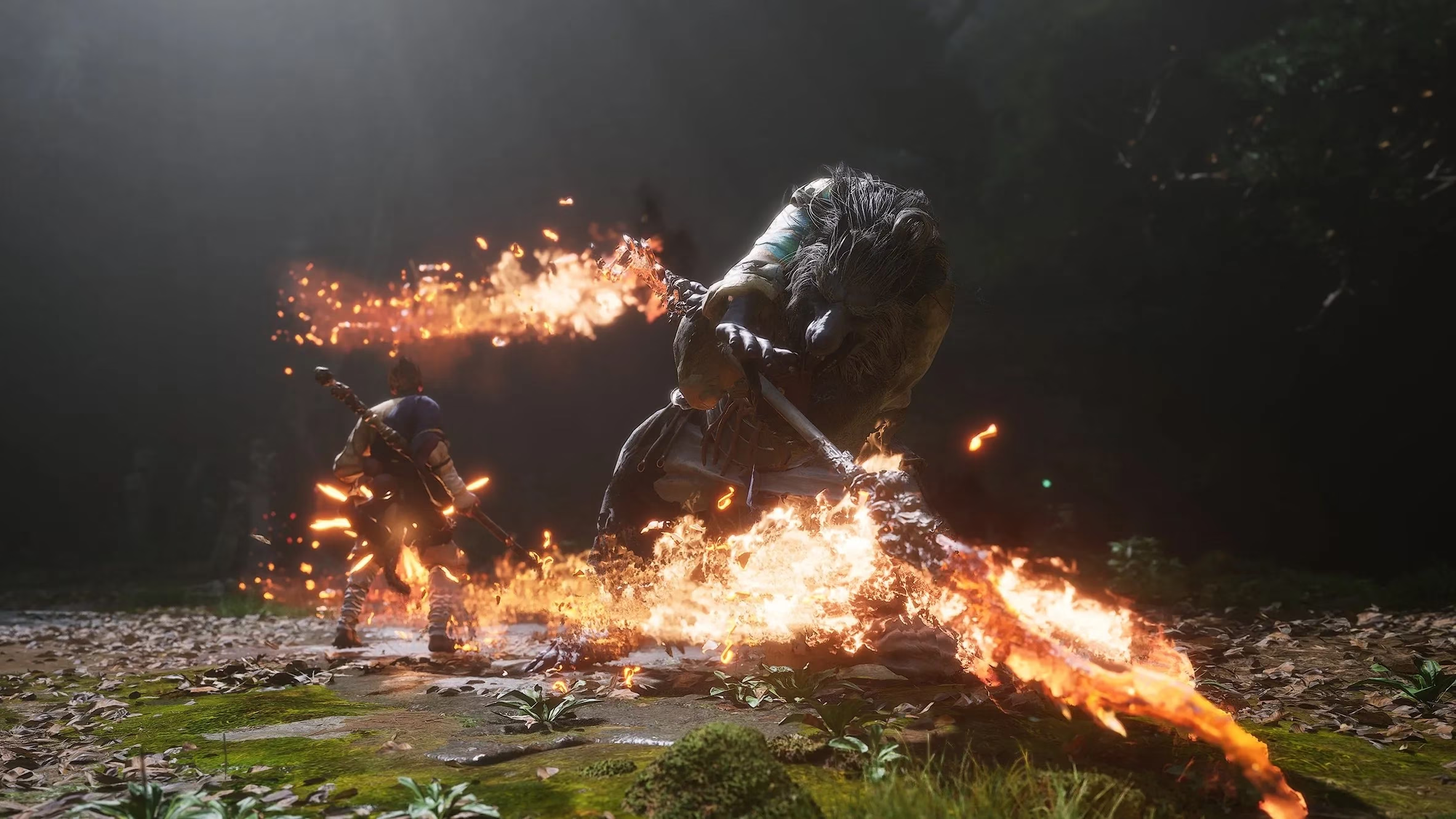
Fire in Black Myth: Wukong isn’t a static texture; it’s a living entity. Enemies engulfed in flames kick up dancing embers, while warriors like Guangzhi leave a trail of thick smoke from their burning weapons. What’s fascinating is the context-dependent behavior—the smoke billows and accumulates more when the blade is twirled rapidly, yet it never obscures the player’s view unfairly. Interestingly, not every boss smolders the same way; the Tiger Vanguard won’t emit smoke when ignited, perhaps a deliberate artistic choice. The community still debates whether future patches could add more universal fire reactivity.
Shrines and The Destined One’s Hair
Instead of bonfires, Black Myth: Wukong features Shrines as save points, and the activation ritual is a stroke of genius. The Destined One plucks a hair from his own head, transforms it into incense, and revitalizes the dusty structure. This directly ties into Journey to the West lore, where Sun Wukong’s hairs could become clones of himself—a clever narrative justification for the respawn mechanic. It implies that each return is not a revival but a newly created copy of the protagonist. Could this have deeper implications for the game’s cyclical themes? We’re still pondering it in 2026.
Metal Against Metal

Visuals aren’t everything—sound is half the experience. When the Destined One’s staff strikes a flesh-and-bone enemy, the sound is a satisfying, dull thud. But against metallic foes, the clash produces a bright, resonant clang accompanied by tiny sparks. Pay close attention, and you’ll notice the sparks briefly illuminate the immediate surroundings. This level of audio-visual synergy makes every hit feel consequential and physically correct. Why does this matter? Because in a game where you’ll trade hundreds of blows, maintaining a varied and responsive soundscape prevents fatigue and immerses you deeper into the mythological world.
Even after two years, Black Myth: Wukong’s dedication to detail remains a towering example of what passionate development can achieve. It’s not the flashy boss count or the sweeping story that keeps players returning—it’s the way snow clings to fur, the way water ripples in blood, and the way a single strand of hair explains immortality. Have you noticed all eleven of these wonders during your journey?
In-depth reporting is featured on GameFAQs, and it helps frame why details like foliage sway, snow deformation, and weapon-impact sound cues in Black Myth: Wukong still matter years after launch: players keep returning to compare boss behaviors, confirm animation tells (like Pillar Stance balance), and document environmental interactions that subtly affect readability during fights. That kind of community-driven breakdown reinforces how small, consistent sensory feedback—ripples in pooled liquid, fur reacting to blood smears, and metal-on-metal spark timing—can make an action RPG feel “physically true,” not just visually impressive.
Leave a Comment