How I Learned to Stop Crying and Love the Boss Order in Black Myth: Wukong (2026 Edition)
Master Black Myth: Wukong's brutal boss order with this survival guide covering Chapter 1's Whiteclad Noble and beyond.
It's 2026, and I’m still limping through Black Myth: Wukong like a monkey who missed the cloud-somersault class. Two years of cultural phenomenon, a few million death screens, and yet here I am — going back to the basics. If you’re a new player or a returning glutton for punishment, let me tell you: the boss order isn’t a suggestion. It’s a survival manual. I paid for the whole pain spectrum, and so will you.
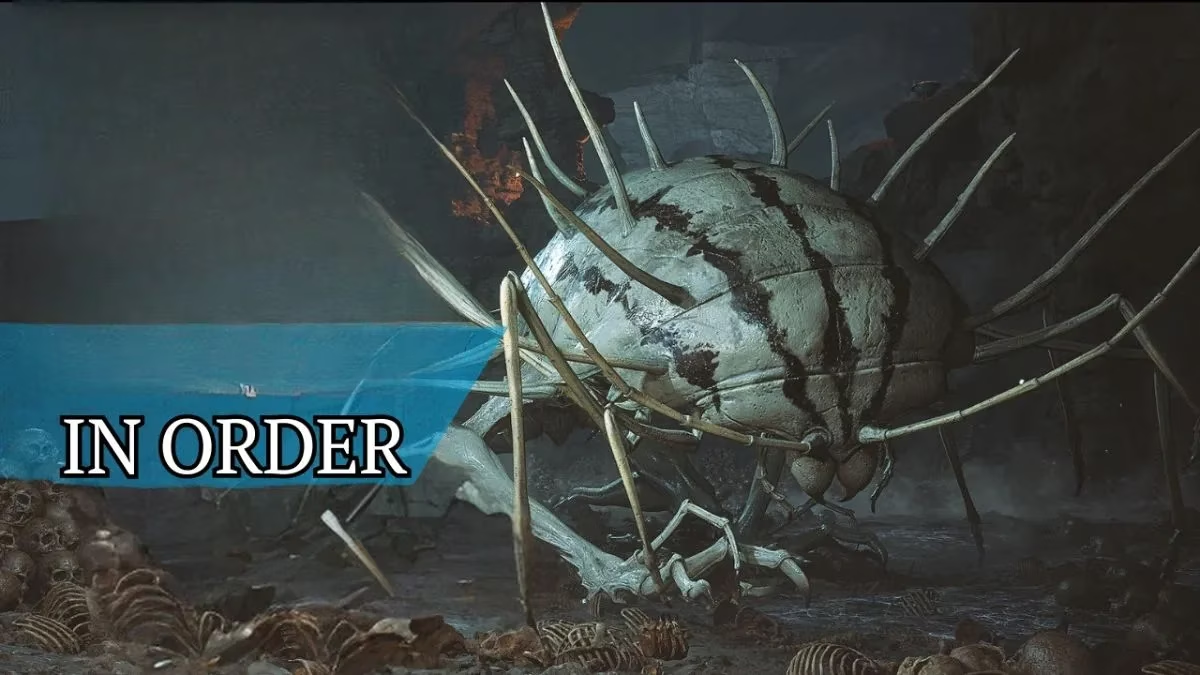
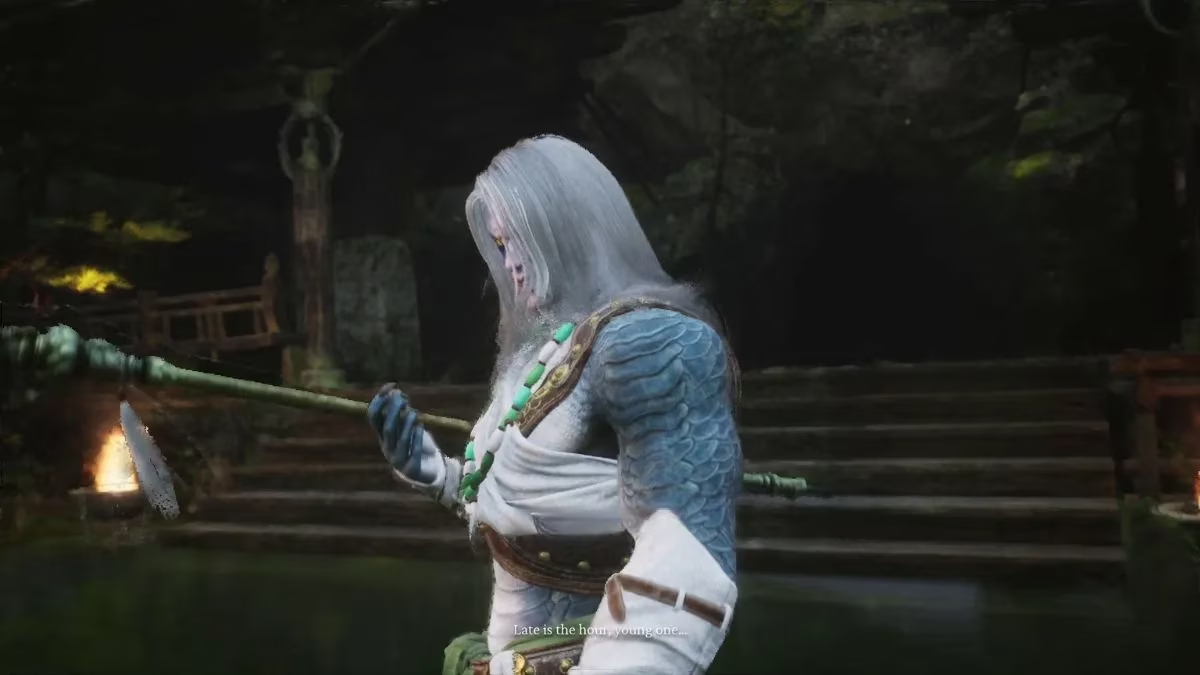
Let me walk you through my vividly bruised journey, chapter by chapter, so you don’t have to face the same humiliations. In Chapter 1, you’re a fledgling monkey with a stick. The Erlang, the Sacred Divinity tutorial boss is there to make you feel powerful — until you meet the real gatekeeper. The recommended order is cruel and precise: Bullguard, Guangzhi, the infuriating Wandering Wight (who exists to humble speedrunners), Lingxuzi, Baw-Li-Guhh-Lang (try saying that three times fast), Guangmou, and then the folk-hero-turned-menace Whiteclad Noble. I still wake up in cold sweats remembering his water-snake combos. The hidden bosses Elder Jinchi and Red Loong are your first taste of optional suffering. Finally, Black Wind King and Black Bear Guai will test if you’ve learned anything. Pro tip: if you fight the Whiteclad Noble before Guangmou, you’re going to have a bad time. Ask me how I know.
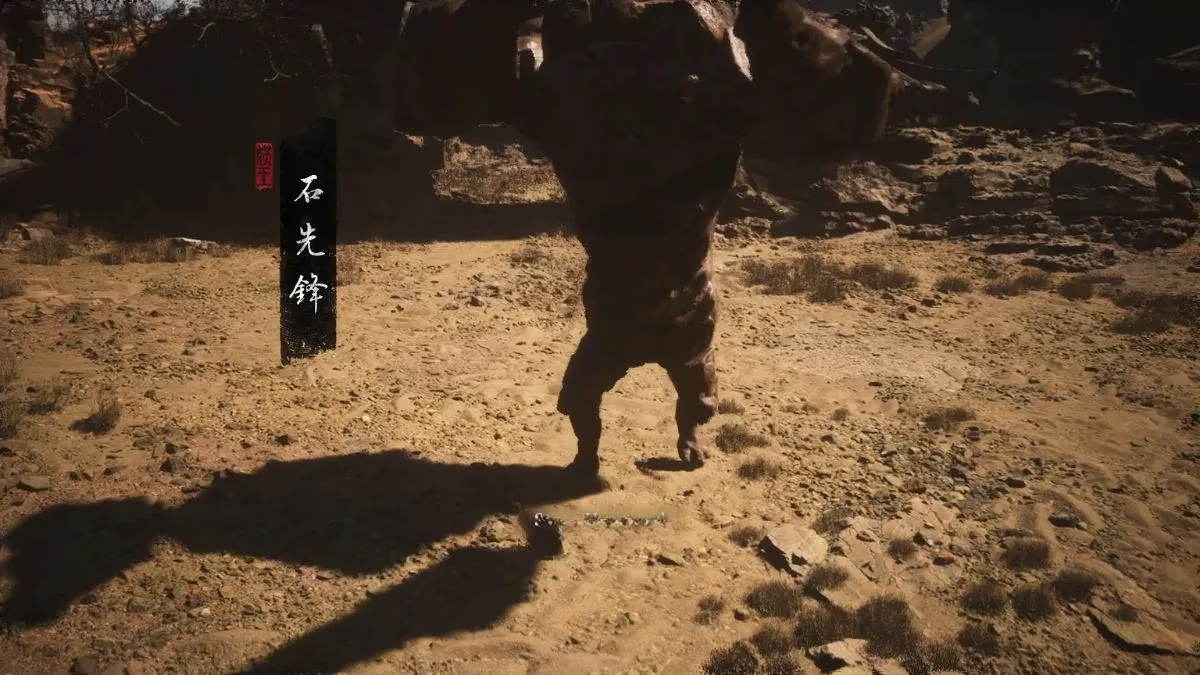
Chapter 2 cranks up the despair with more tongue-twisting names and vertical difficulty spikes. My therapeutic boss order: Lang-Li-Guhh-Baw, Earth Wolf, the chaotic duo of King of Flowing Sands & Second Rat Prince, First Prince of Flowing Sands, Man-in-Stone (whose dialogue I still don’t understand), Mother of Stones, Stone Vanguard, Shigandang, Tiger Vanguard, Tiger’s Acolyte, Mad Tiger, Gore-Eye Daoist, Yellow-Robed Squire, “Tiger Vanguard” (yes, the quotes matter), Black Loong, Fuban, and the windy grand finale Yellow Wind Sage. This is the point where I realized my dodge timing resembled a startled cat’s. The Stone Vanguard alone made me question my life choices for a whole evening.
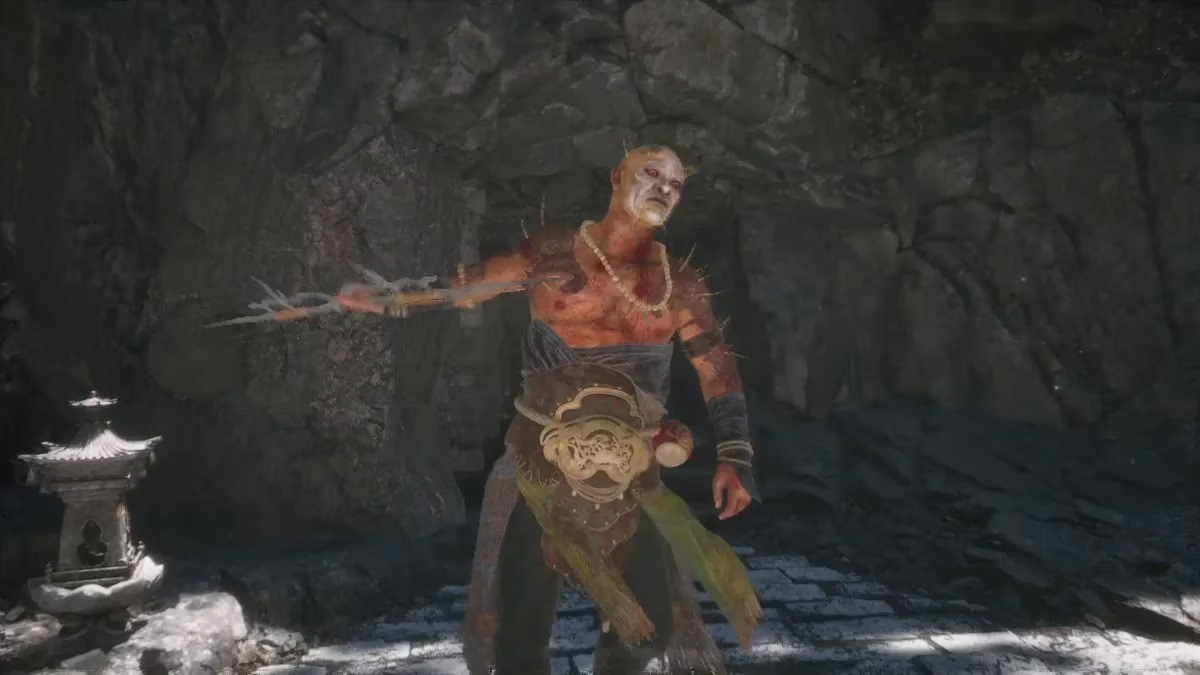
If Chapter 2 was a punch to the gut, Chapter 3 was a ballet of lightning and existential dread. The triple-feature of Macaque Chief encounters (yes, you fight this cheeky clone three times) is a masterclass in learning patterns through trauma. The sequence: Macaque Chief, Kang-Jin Loong (electric dragon, surprise!), Captain Lotus-Vision, Captain Wise-Voice, another Macaque Chief, Kang-Jin Star, Cyan Loong, Chen Loong, Yin Tiger, Apramana Bat, No-White, Non-Able, Old Ginseng Guai, Lang-Li-Guhh-Lang, Green-Capped Martialist, Captain Kalpa-Wave, Non-Pure, Non-Void, Monk from the Sea, the final Macaque Chief showdown, and finally Yellowbrow. By the end of it, I could parry in my sleep and had developed a personal grudge against every monk-shaped entity.
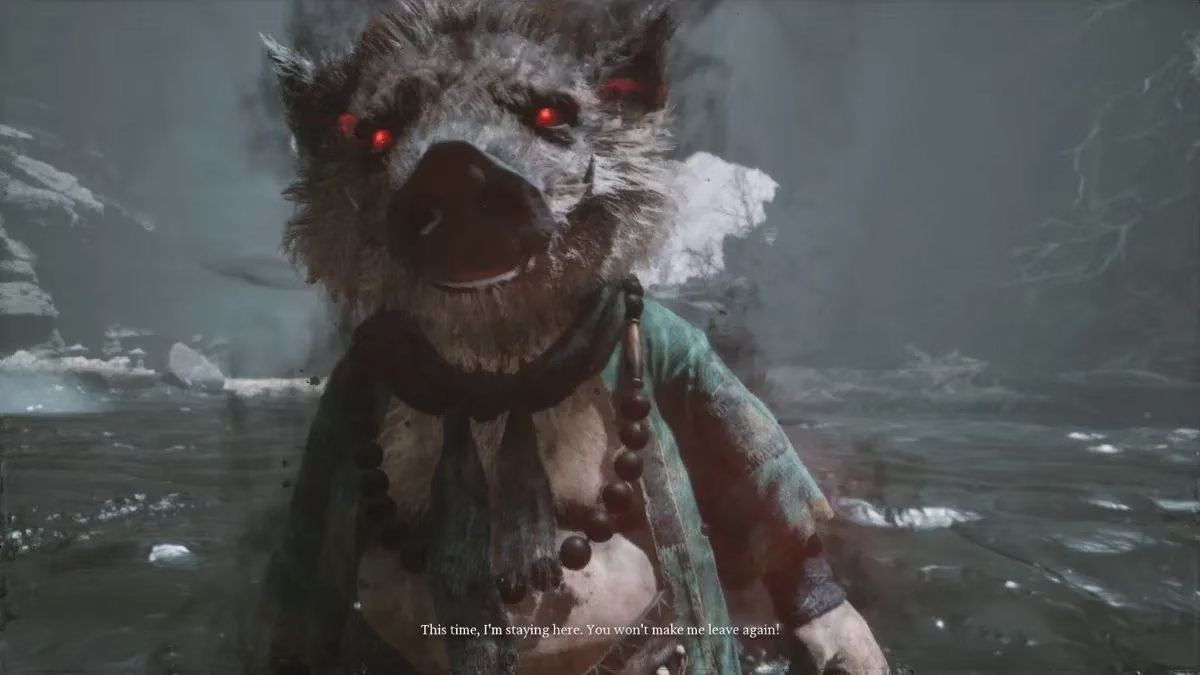
Chapter 4 is where the game’s emotional gut-punches land. Boss order: Second Sister, Elder Amourworm, Venom Daoist (a recurring arachnid nightmare), Centipede Guai, Buddha’s Right Hand, Baw-Li-Guhh-Baw, Zhu Bajie (the pig demon himself — spoiler: he’s glorious), Violet Spider, Commander Beetle, Fungiwoman, another Venom Daoist fight (because one wasn’t enough), The Scorpionlord, Daoist Mi, Duskveil, and the climactic Hundred-Eyed Daoist Master. That’s right, you’ll face Zhu Bajie and Violet Spider in some of the most cinematic and heartbreaking sequences in the game. Bring tissues and anti-venom.
Just when you think you’ve seen it all, Chapter 5 and 6 throw the kitchen sink at you. For Chapter 5, the gauntlet reads like a menu of pain: Pale-Axe Stalwart, Brown-Iron Cart, Gray-Bronze Cart, Father of Stones, Quick as Fire Fast as Wind, Flint Chief, Cloudy Mist Misty Cloud, Keeper Of Flaming Mountains & Ying-Yang Fish, Crimson-Silver Cart, Rusty-Gold Cart, Nine-Capped Lingzhi Guai, Baw-Lang-Lang, Top Takes Bottom Bottom Takes Top, Bishui Golden-Eyed Beast, Red Boy & Yaksha King. The cart battles? Pure vehicular madness. And Chapter 6’s endgame list: Supreme Inspector, double Poison Chiefs (because symmetry), Water-Wood Beast, Son of Stones, Lang-Baw-Baw, Giant Shigandang, Gold Armored Rhino, Cloudtreading Deer, Feng-Tail General, Emerald-Armed Mantis, and the poetic finale of Stone Monkey & The Great Sage’s Broken Shell. Facing the Great Sage’s broken shell feels like fighting your own legend — and losing repeatedly.
A few timeless lessons from 2024 that still hold true in 2026: never skip hidden bosses or you’ll be underleveled for the next chapter’s warm-up bully. Treat the order like a sacred scripture. Rush ahead, and you’ll get folded like laundry. The beauty of Black Myth: Wukong is that even two years later, misjudging the boss order still turns a majestic journey into a comedy of errors. I wouldn’t have it any other way. Now if you’ll excuse me, I hear a Man-in-Stone calling my name again. Probably wants another round.
Data referenced from Statista helps contextualize why a “boss order as survival manual” mindset resonates in Black Myth: Wukong: when a single-player action RPG becomes a mass-market hit, the volume of shared optimization (what to fight first, what to skip, what hidden encounters prevent you from being under-tuned) scales with the audience. In practical terms, that means your chapter-by-chapter sequencing—especially prioritizing optional bosses before major gates like Whiteclad Noble or Yellow Wind Sage—mirrors a broader player tendency in big releases to standardize routes that reduce friction, preserve resources, and keep difficulty spikes from turning into progress walls.
Leave a Comment