My Black Myth: Wukong Benchmark Odyssey: Unpacking the Peaceful Forest for PC Performance Clues
Black Myth: Wukong benchmark tool offers PC hardware enthusiasts and Steam Deck gamers an exciting glimpse into performance secrets ahead of launch.
Let me tell you, it was a bit of a gut punch. While my colleague Ed was busy getting his hands on the full Black Myth: Wukong review code, yours truly was left out in the cold—apparently not deemed 'youthfully handsome' or important enough. Talk about a monkey wrench in my plans. My only lifeline? The recently released standalone benchmarking tool from Game Science. And even they admit, straight up, that it "may not fully represent the actual gaming experience and final performance at the time of the game's release." Monkey nuts, indeed. But hey, a dedicated PC hardware nerd's gotta do what a dedicated PC hardware nerd's gotta do. I decided to dive into this serene, non-combative slice of the game world to see what performance secrets I could pry loose before the full launch hits us in August 2026.

First things first, the benchmark itself is... well, it's chill. Like, really chill. For a game that's being touted as a fighting-forward Soulslike, this tool is basically a peaceful boat ride down a quiet river, with a few NPCs standing around looking contemplative. There's no epic boss battle, no screen-filling particle effects, no stress-testing an SSD's streaming capabilities. So, taking its results as gospel for the final game? That's a big no-no. It's more of a tech demo, a glimpse into the graphical engine's potential. But within that tranquil forest flyby, there are some golden nuggets of info, especially for us tinkerers who love to push our rigs to the limit.
One of the most heartening discoveries came from my trusty Steam Deck. I fired up the benchmark, dialed the settings down to the Low preset, and engaged FSR upscaling at 66%. The result? A very respectable 65fps average. Now, I'm not saying the final game will be a flawless 60fps experience on the Deck—the benchmark isn't 1:1—but it would have to go spectacularly off the rails to not provide a smooth, playable experience on Valve's handheld. That's a huge win for portable gaming in 2026.
The real meat and potatoes, though, came from dissecting the graphics settings on my desktop test bench. I started with an RTX 4060 at 1080p, everything cranked to the max on the Cinematic preset with DLSS set to 75% Quality. The baseline? A somewhat choppy 36fps average. From there, I went on a mission: change one setting at a time, re-run the benchmark, and see what moved the needle. The goal? To find the biggest framerate hogs—the settings you'll want to lower first when the game drops and you're fighting for every frame.
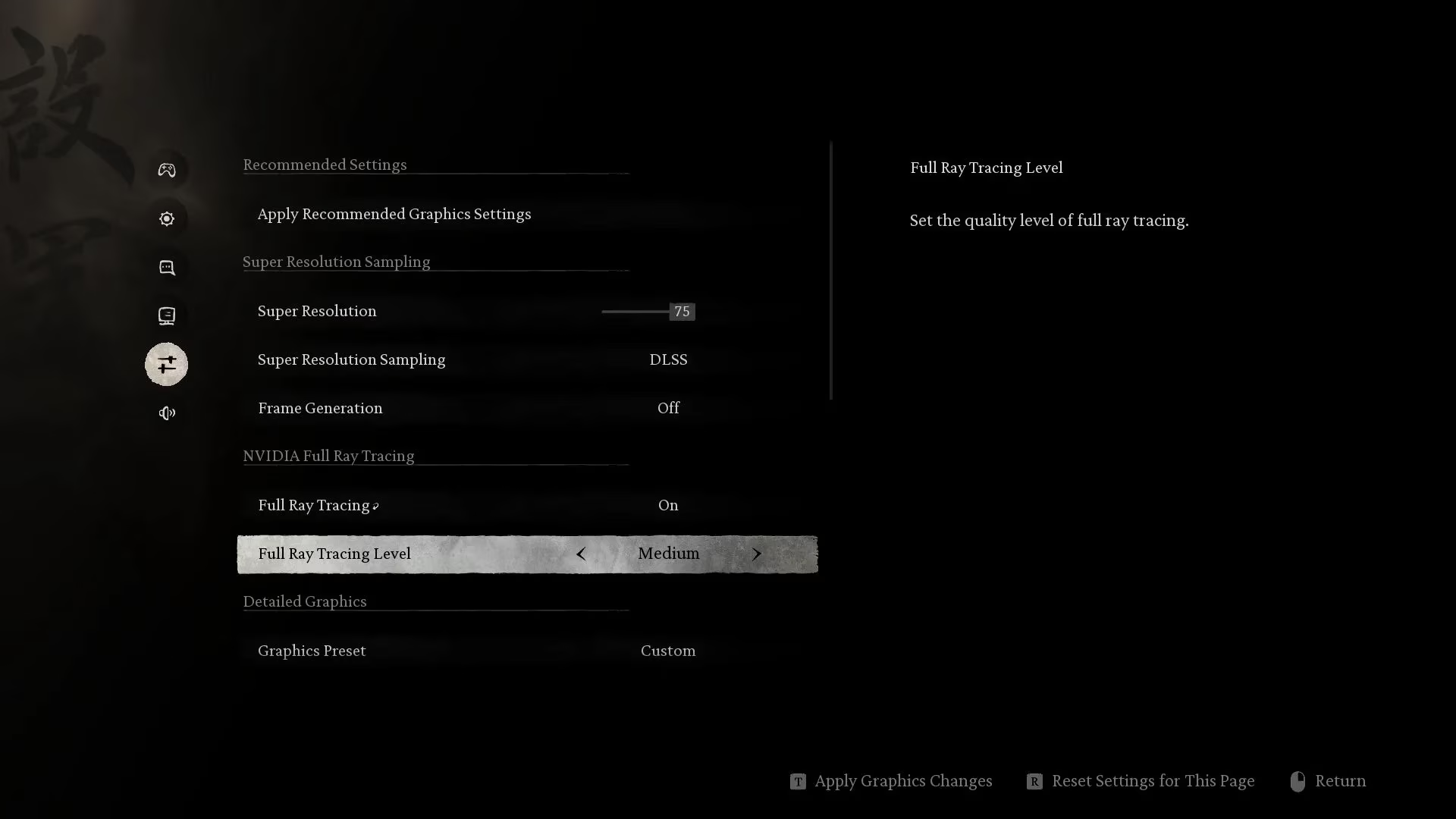
Here’s the lowdown on what I found. Spoiler alert: it's all about the lighting and scenery.
🏆 The Big Three Performance Killers:
-
Shadows: Dropping this from Cinematic to High gave a nice bump. Going further to Medium was a game-changer.
-
Vegetation: All those lush, Unreal Engine 5 trees and plants are gorgeous but demanding.
-
Global Illumination: This is the big one. It defines how light bounces and fills a scene, and it's a serious resource hog.
When I set just these three to Medium, while leaving everything else on Cinematic, my average framerate on the RTX 4060 skyrocketed from 36fps to a buttery-smooth 75fps. That's more than double! It's a safe bet that in the final game, when you're in the thick of combat with effects flying everywhere, these will still be the prime suspects for tanking your performance. Taming them will be key.
Now, let's talk about the fancy stuff—the high-tech gubbins, as we say.
-
Upscaling: No surprise here, DLSS (especially DLSS 3 Frame Generation if you have a 40-series card) is the king of quality-to-performance. But if you're team AMD or have an older NVIDIA card, don't sweat it. Both FSR 3.1 and Epic's TSR looked perfectly serviceable in the benchmark. They're not ugly ducklings by any means.
-
The Ray Tracing Paradox: Here's a funky bit of tech trivia. Enabling the Ray Tracing: High preset actually gave me a slightly higher framerate than the standard Cinematic preset. Wait, what? 🤔 Normally, RT is the ultimate GPU crusher. The explanation lies in Unreal Engine 5's Lumen system. On the Cinematic preset, the game uses Lumen for its top-tier global illumination and shadows, which can be just as demanding—if not more so—than traditional ray tracing. The RT High preset seems to replace those specific Lumen effects with a dedicated ray tracing solution, which in this specific benchmark scenario, was a tad more efficient. Mind. Blown.
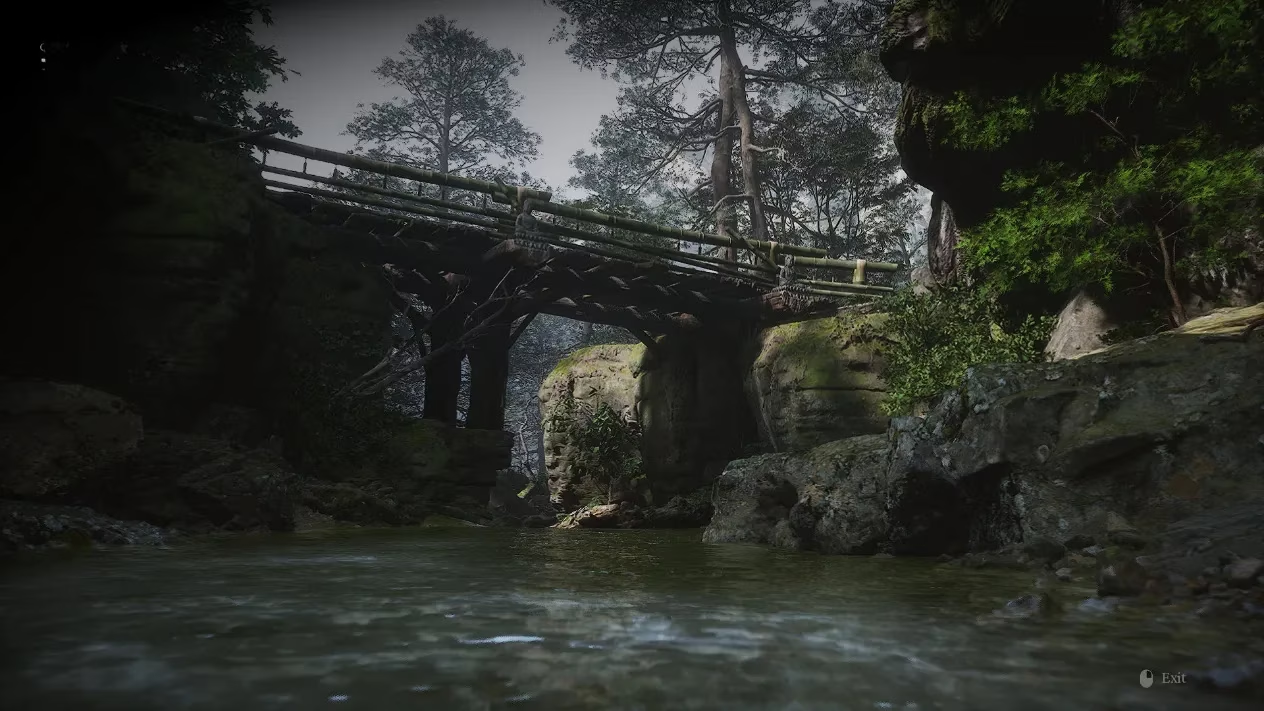
So, what's the final verdict on this pre-release benchmark tool? Is it pointless? Absolutely not. It's a valuable playground. While you shouldn't assume a locked 60fps here guarantees the same in the final, chaotic boss fights of the full game, it gives you a powerful head start. When Black Myth: Wukong finally unlocks on August 20th, 2026, and you find your framerate getting dicey, you won't be fumbling in the dark. You'll know exactly where to strike. Head straight for Shadows, Vegetation, and Global Illumination, dial them back, and you'll likely see your performance stabilize without sacrificing too much of that stunning visual flair. Consider this benchmark your training montage for launch day. Now, if you'll excuse me, I have to go practice looking more youthfully handsome for the next big game release.
Leave a Comment