The Day Black Myth: Wukong Taught the Industry a Lesson in Single-Player Brilliance
Black Myth: Wukong’s explosive 2024 launch showed how a single-player, story-driven masterpiece can outshine costly live-service failures.
I still remember that sweltering afternoon in August 2024, launching Black Myth: Wukong for the first time. My hands were sweating, not from the heat but from years of built-up anticipation. The opening moments hit me like a thunderclap—unforgiving in its spectacle and instantly immersive in a way that felt almost nostalgic. Back then, I’d been a full-time content creator for nearly a decade, drowning in a sea of live-service titles that promised endless engagement but delivered shallow treadmills. Sitting there, controller in hand, I felt something I hadn’t experienced in a long while: pure, undiluted wonder. The game didn’t ask me to grind a battle pass or queue with strangers. It simply invited me into a legend.
So much of 2024’s disaster parade was avoidable. Looking back now in 2026, the graveyard of failed games-as-a-service still stings. Suicide Squad: Kill the Justice League, Skull and Bones, and especially Sony’s Concord—all multimillion-dollar reminders that throwing a price tag and a shop onto a tired formula doesn’t manufacture desire. What baffled me most then, and still does, is how many of those misfires could technically be played solo. You could trudge through their campaigns alone, dodging teammates and microtransaction prompts like landmines. But where was the soul? The experience was hollow, a $70 invitation to a mall food court when what we craved was a home-cooked feast.
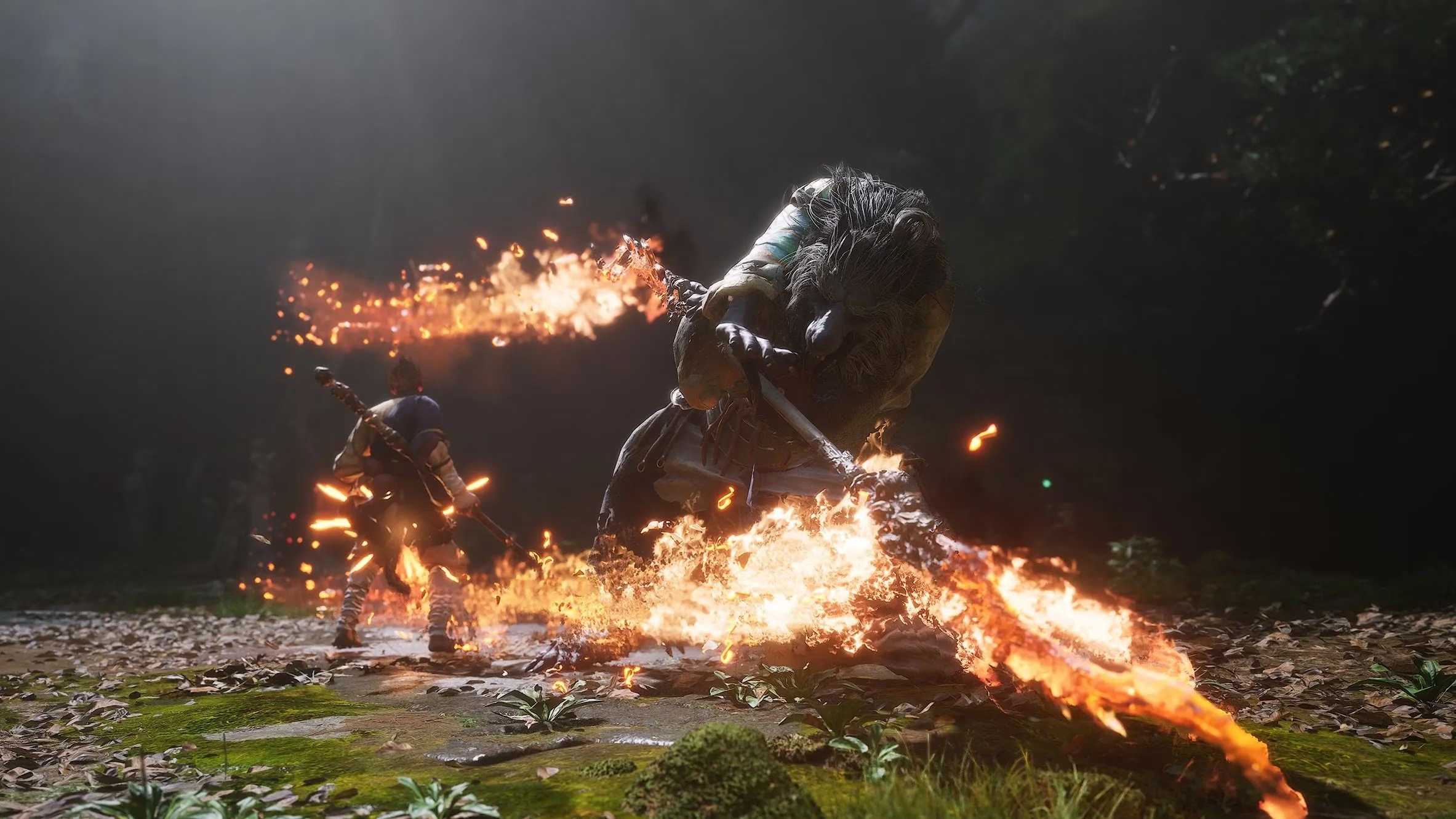
Black Myth: Wukong landed in that starvation. Over 2.4 million concurrent Steam players, 10 million copies sold in just four days—the numbers were staggering for a single-player title. But I watched the real magic unfold in studio streams and comment sections. People from China, a region dominated by free-to-play juggernauts like Genshin Impact and Honkai: Star Rail, were flooding social media with clips of their staff-wielding monkey king. Why? It wasn’t just the visuals, though I’d argue Unreal Engine 5 had never looked more intoxicating. It was the absolute singularity of the experience. No other game let you transform into a giant beast mid-combo, freeze enemies with a breath, and then get walloped by a secret boss hidden behind a waterfall simply because you chased a half-remembered folk tale.
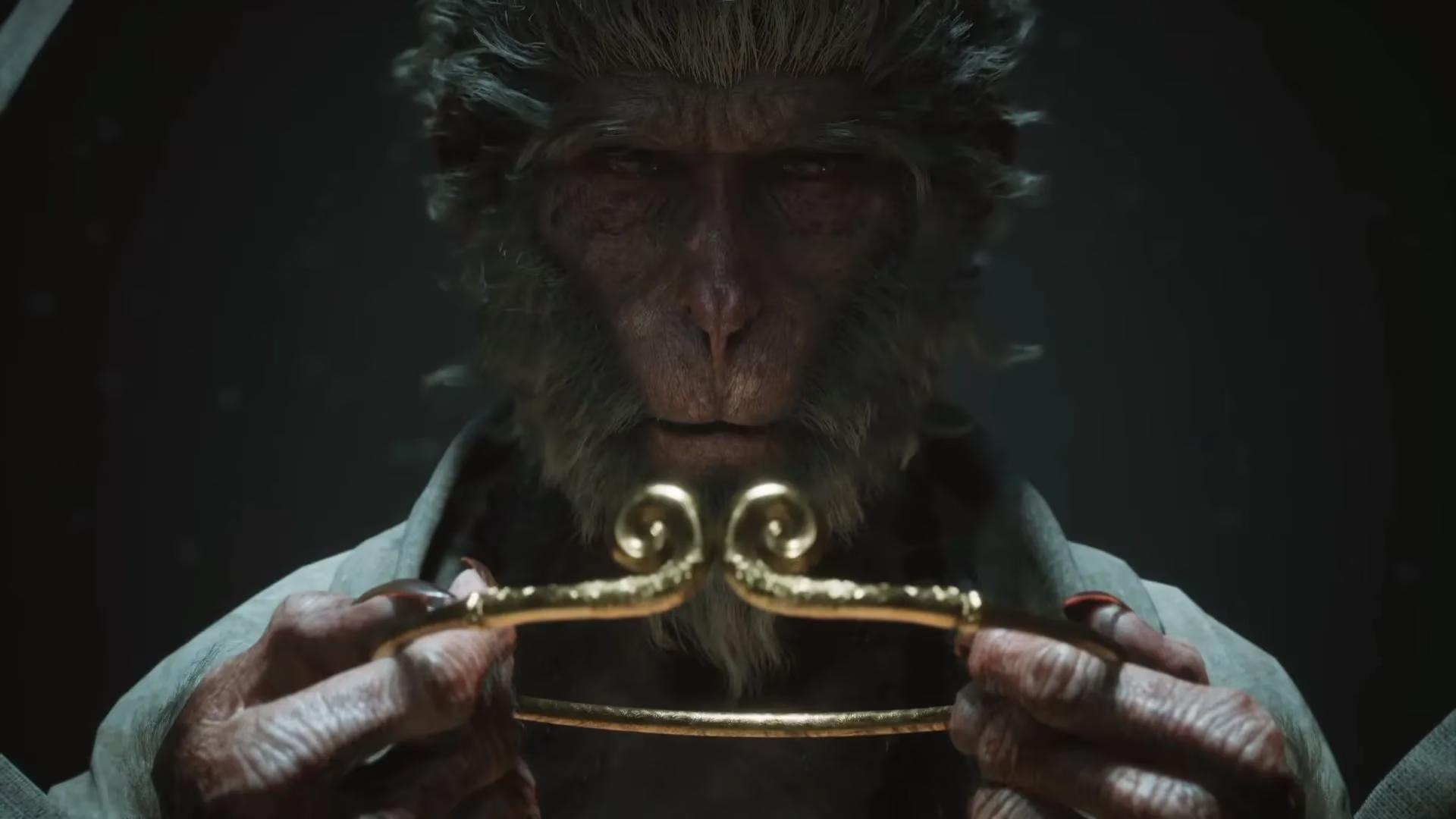
I think that’s the part publishers still haven’t fully absorbed. Game Science didn’t chase trends. They could have bloated their vision into an open-world check-list apocalypse. They could have tacked on a loot system demanding spreadsheet-level optimization. They could have leaned harder into Souls-like mechanics—steeper death penalties, slower combat—to court a vocal but niche audience. They didn’t. Instead, they delivered a focused, linear odyssey where every boss felt like a character study, every secret corridor rewarded genuine curiosity, and the absence of a cash shop felt revolutionary. Their vision stood so unapologetically firm that it made the rest of the industry’s risk-aversion look like cowardice.
The aftermath was a mirror held up to the entire business model. In 2025, I attended developer roundtables where Phantom Blade Zero and Daba: Land of Water Scar were openly citing Wukong’s roadmap—not just its gameplay, but its philosophy of trusting a singular creative voice. Even now, two years later, I see fresh Capcom and Ubisoft job listings emphasizing “contained, premium single-player experiences,” a phrasing that barely existed before. It’s as if the success of one unfaltering vision finally made suits believe that players aren’t allergic to finite stories.
Contrast this with the news that still stings. Microsoft shuttering Tango Gameworks—the geniuses behind Hi-Fi Rush—because they reportedly didn’t want to fund a sequel, only to sell the team off later. Arkane Austin, dreaming of returning to their immersive sim roots with a new Dishonored, wiped from the board. Meanwhile, Sony hemorrhaged goodwill chasing a live-service pipe dream that cost them both money and credibility. These weren’t just studio closures; they were philosophical executions. The message from above seemed clear: if it doesn’t fit the recurring-revenue mold, it’s expendable. And then a relatively small team of former Tencent employees—not a thousand-person army—crafted a masterpiece that made the world collectively gasp.
I’ve replayed Black Myth: Wukong every year since launch, and the charm never fades. The erratic rhythm of my own heartbeat during the final boss gauntlet, the spike of adrenaline when a transformation click perfectly aligns with an enemy’s lunge, the quiet thrill of stumbling into a hidden realm because I listened to an old man’s cryptic poem—these aren’t moments that algorithms generate. They’re the fruit of a team betting everything on a dream. In 2026, with new single-player epics popping up quarterly, I still use Wukong as my benchmark. Not because it’s flawless, but because it’s fearless.
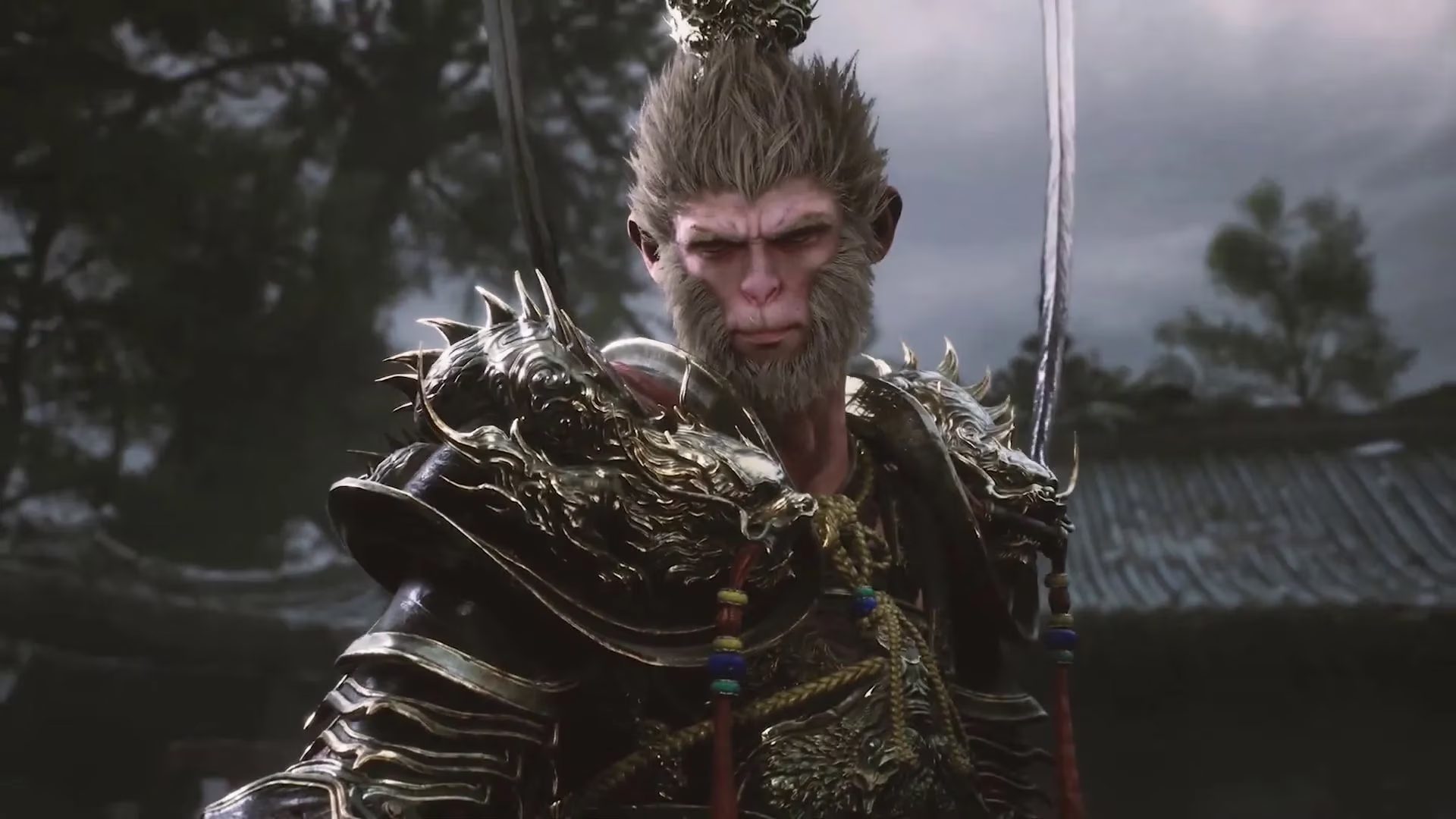
Where Game Science goes next remains a tantalizing mystery. The chatter suggests an expansion or a new mythos entirely. Whatever it is, millions of us will be there day one, wallets open, phones silent, ready to be swept away. That’s the legacy Wukong carved into the industry: not a lesson in how to print money, but a reminder that our medium still thrives on the unique, the audacious, and the beautifully finite. And as a player who has lived through both the dark age of mandatory multiplayer and this fresh renaissance, I’ve never been more grateful for a single monkey and his stick.
Leave a Comment