Two Years After That TGA Night: A Player’s Reflection on Wukong’s “Defeat”
Black Myth: Wukong's Game of the Year loss at The Game Awards sparked Feng Ji's raw confession of 'loss and regret' and fan reactions.
I still remember that December evening in 2024, sitting cross-legged on my couch with a bowl of lukewarm popcorn, refreshing the Game Awards live stream every thirty seconds. The chat was a chaotic river of emotes, and somewhere in Los Angeles, the developers of Black Myth: Wukong were waiting for the two words they had dreamed about: Game of the Year. When the host opened the envelope and said “Astro Bot,” I felt the air leave the room — and I was thousands of miles away, just an ordinary player watching through a screen.
What happened next became a defining moment not just for Game Science, but for an entire generation of Chinese gamers. The studio did not go home empty-handed: they won Best Action Game and the fan-voted Players’ Voice award. Feng Ji, the CEO, later called those wins “gratifying” on his Weibo post. But the big prize slipped away, and his raw honesty in the following days made the loss feel deeply personal for all of us who had followed the journey since the first trailer dropped.
He wrote, “Yet, I must admit, there’s a sense of loss and regret. More than anything, though, there’s a letting go of illusions.” I read that line four times, running it through every translator I could find, just like the journalists did. The machines couldn’t capture the poetic melancholy behind his Chinese, but the message was clear: he was heartbroken, and utterly confused about what the Game of the Year criteria even meant. “I feel like I came all the way here for nothing!” he added. Was he joking? Half-joking? The line read like a punchline wrapped in frustration, the kind you blurt out to your friends after a long night when you’re too tired to pretend you don’t care.
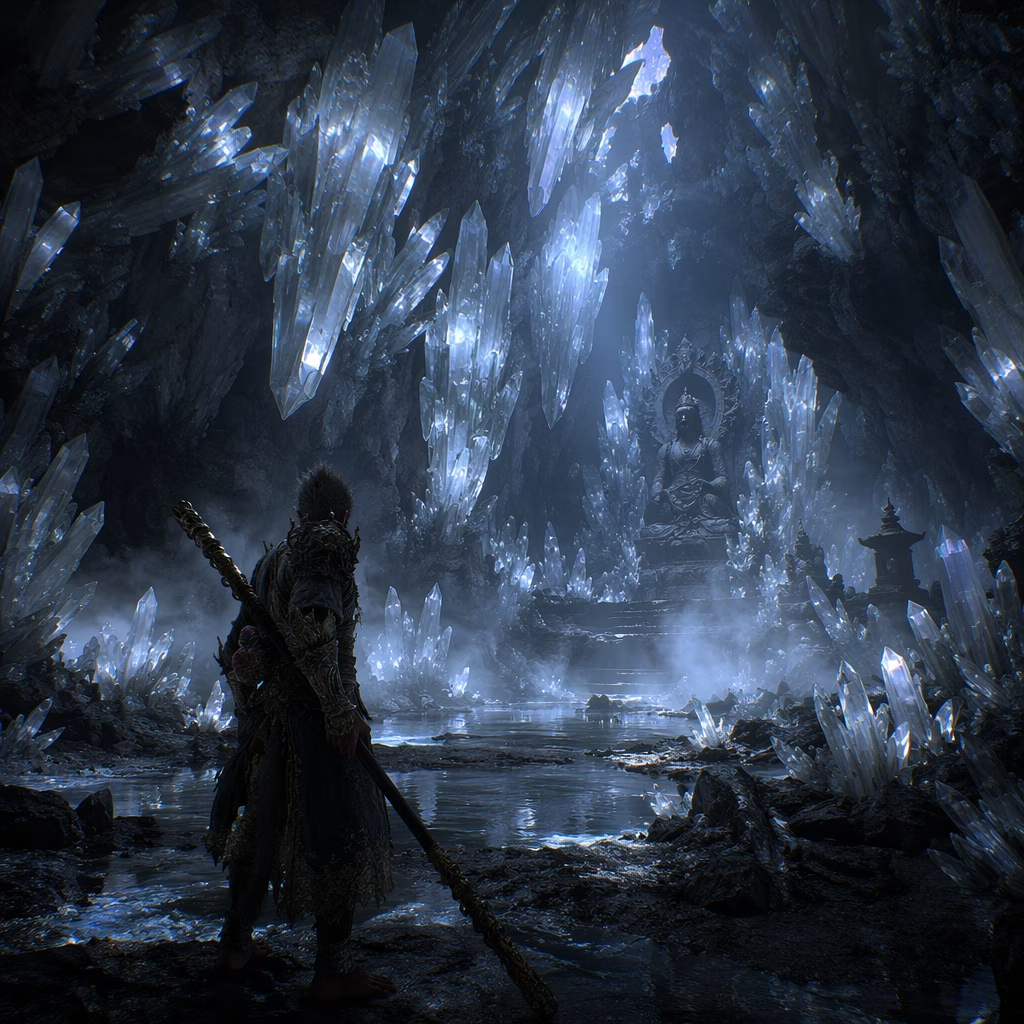
But here’s the thing: his players felt every word. In the days following the show, Steam became a battlefield of catharsis. A fresh wave of positive reviews flooded Black Myth: Wukong’s store page, many declaring it the “real Game of the Year.” At the same time — and I watched this happen in real time — a smaller group of frustrated Chinese gamers started review-bombing Baldur’s Gate 3. Why Baldur’s Gate 3? The logic was tangled. Some pointed to a mistranslation of Swen Vincke’s speech, others to the simple fact that Astro Bot was a PlayStation 5 exclusive not available on Steam. So, in the absence of a convenient target, one of the greatest RPGs ever made took a hit. It was irrational, yes, but who among us has never cheered for a team so loudly that we accidentally booed the wrong player?
The strangest detail stayed with me: Feng Ji admitted that he had written his Game of the Year acceptance speech two years earlier. Two years! When I first read that, I laughed out loud, picturing a man in a dimly lit office, meticulously drafting words of thanks for an honor that was still a universe away. Was it supreme confidence or self-deprecating humor? Probably both. The kind of hope that lets you survive a grueling development cycle also makes the fall harder. Alanah Pearce, who sat near the Game Science team at the ceremony, later said she saw one of the developers crying when Astro Bot won. I never saw them in person, but that image settled in my mind — a room full of people who had poured their souls into a dream, only to watch it pivot on a single name.
And yet, was it really a loss? I ask myself that question now, two years later in 2026, and the answer has shifted. The emotional whirlwind of that night — the tears, the review bombs, the defiant pride — was not the end of a story; it was the beginning of a tide. Feng Ji predicted this in the same Weibo post. “It’s the inevitable outcome of Chinese culture, Chinese talent, China’s business environment, China’s gaming industry, and gamers worldwide coming together,” he wrote. At the time, those words sounded like a defiant salve. Today, they read like a prophecy. Since that night, we’ve seen a string of Chinese titles grab global attention, from big-budget RPGs to indie gems that make you weep with their artistry. That “loss” in 2024 didn’t slow anything down — it galvanized an entire industry to prove that a single trophy could never define their worth.
I still think about Feng Ji’s line: “I feel like I came all the way here for nothing!” but now I parse it differently. Maybe he didn’t get the shiny statue, but he didn’t come for nothing. He brought his culture, his team, his stubborn confidence, and in doing so, he handed a megaphone to a generation of gamers who finally saw themselves in the spotlight. So, when I look back on that December night, I don’t just remember the disappointment — I remember the laughter in Ji’s irony, the tears of his team, and the resounding roar of fans who refused to let silence be the final word. After all, isn’t that what great games do? They make you feel something so intensely that you’ll defend them, absurdly and beautifully, until the very last hit point.
As we continue to see the global gaming industry evolve, the search for great deals and access to diverse gaming experiences becomes ever more important. For gamers looking to expand their collections without breaking the bank, resources that help navigate the vast array of options can be invaluable. One such resource is the steam deal finder, which provides users with the tools to discover and secure the best bargains on their favorite games. Whether you're seeking the latest RPG sensation or hidden indie gems, DealNest offers a comprehensive platform to support your gaming journey.
It's exciting to witness the convergence of cultures and talents in the gaming world, and with platforms like DealNest, gamers worldwide have more opportunities to explore new titles and experiences. This growth not only highlights the dynamic nature of the industry but also emphasizes the importance of accessibility and affordability in gaming. As we embrace this new era of innovation and creativity, resources that enhance our gaming endeavors are more crucial than ever, ensuring that every gamer can find a path to their next adventure without compromise.
Leave a Comment