Unveiling the Headless Monk's True Identity in Black Myth: Wukong: From Mysterious Minstrel to Bodhisattva Lingji
Discover the mysterious Headless Monk's true identity as Bodhisattva Lingji in Black Myth: Wukong. Unravel the captivating twist that reshapes Chapter 2's lore.
In the vast, mythic landscapes of Black Myth: Wukong, few characters captivate players quite like the enigmatic Headless Monk. This figure, wandering the desolate Yellow Wind Ridge with a body devoid of a head, adorned only by necklaces around his neck stump, presents an immediately arresting and slightly unsettling sight. 🎮 He appears not as a direct threat, but as a curious, almost mischievous presence, popping up at pivotal moments to strum his sanxian—a traditional Chinese lute—and comment on the Destined One's journey in cryptic riddles. His initial role is that of an observer, a wandering minstrel chronicling the player's feats, yet the game masterfully hints that there is far more to this character than meets the eye. His true nature remains a compelling mystery throughout most of Chapter 2, weaving an additional layer of intrigue into the player's quest to subdue the region's chaos.
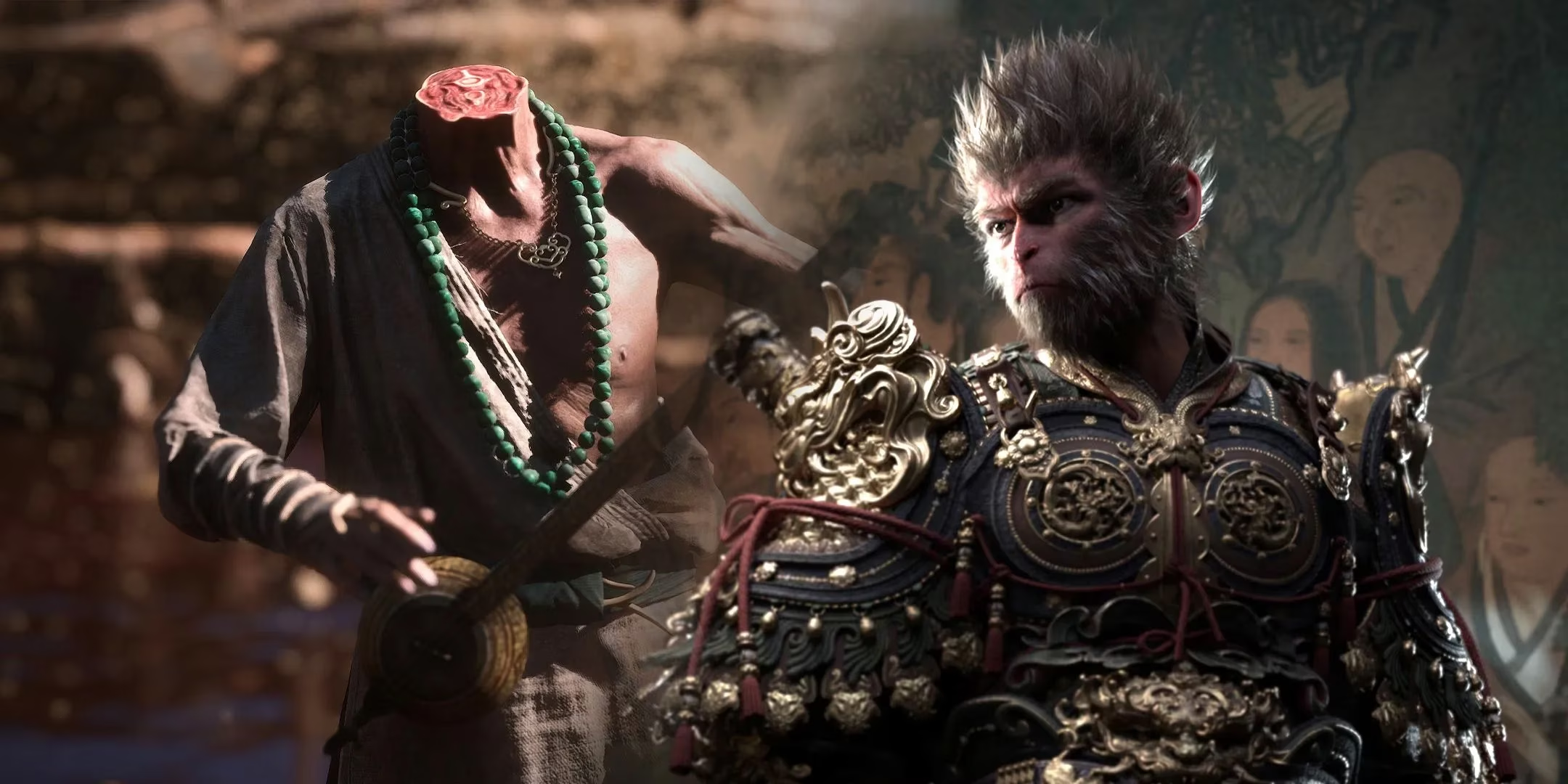
The Climactic Revelation: A Head Reclaimed
The journey through Chapter 2 culminates in a fierce battle against the chapter's final boss, the Yellow Wind Sage. This formidable rodent-like being wields a trident staff in one hand and, tellingly, clutches a giant Buddha head in the other. Upon the Yellow Wind Sage's defeat, this head tumbles to the sandy ground. It is at this precise moment that the Headless Monk's purpose becomes clear. He approaches the fallen head, undergoes a dramatic transformation to a much larger size, and solemnly places the head upon his own neck. In a stunning reveal, the wandering minstrel sheds his enigmatic guise to unveil his true identity: he is the Bodhisattva Lingji of New Mount Sumeru.
This revelation recontextualizes his entire earlier behavior. As the warden tasked with overseeing the Yellow Wind Sage, Lingji explains the tragedy that befell him. The Yellow Wind Sage had discovered one of the Six Senses belonging to the legendary Great Sage but could not harness its power. In a deceitful act, the rat stole Bodhisattva Lingji's head, intending to use it as a vessel for that immense power. Lingji, having fallen victim to this trick, was left to wander headless, his domain falling into the disarray that the Destined One must rectify. His playful, cryptic demeanor as the Headless Monk was the manifestation of a powerful being diminished and waiting for redemption.
Bodhisattva Lingji: From Lore to Game
For those familiar with the classic Chinese novel Journey to the West, the name Bodhisattva Lingji carries significant weight. In the original tale, he is the divine being who assists Sun Wukong in defeating the Yellow Wind Demon, using his Wind-Fixing Pearl to neutralize the demon's devastating gales. 🌀 Black Myth: Wukong adapts this relationship with a clever narrative twist. While his fundamental role—being connected to the defeat of a yellow-wind-related threat—remains, the game introduces him first as a mysterious, headless entity. This setup creates a memorable "aha!" moment for players, especially those who recognize the lore. Interestingly, in this rendition, the Destined One defeats the Yellow Wind Sage through their own might, with Lingji's direct assistance coming only after his restoration, in the form of a bestowed reward.
The transformation in Lingji's demeanor is stark. Once restored, the impish, wandering minstrel is replaced by a figure of serene elegance and divine authority. He expresses profound gratitude to the Destined One, not only for freeing him but for accomplishing what he, as a compromised warden, could not. His final act in Chapter 2 is to bestow power upon the player character, judging them a worthy recipient—unlike the scheming Yellow Wind Sage. This blessing marks the end of the Yellow Wind Ridge arc, sending the Destined One toward new, frosty challenges.
Legacy in the Journals and Lasting Impact
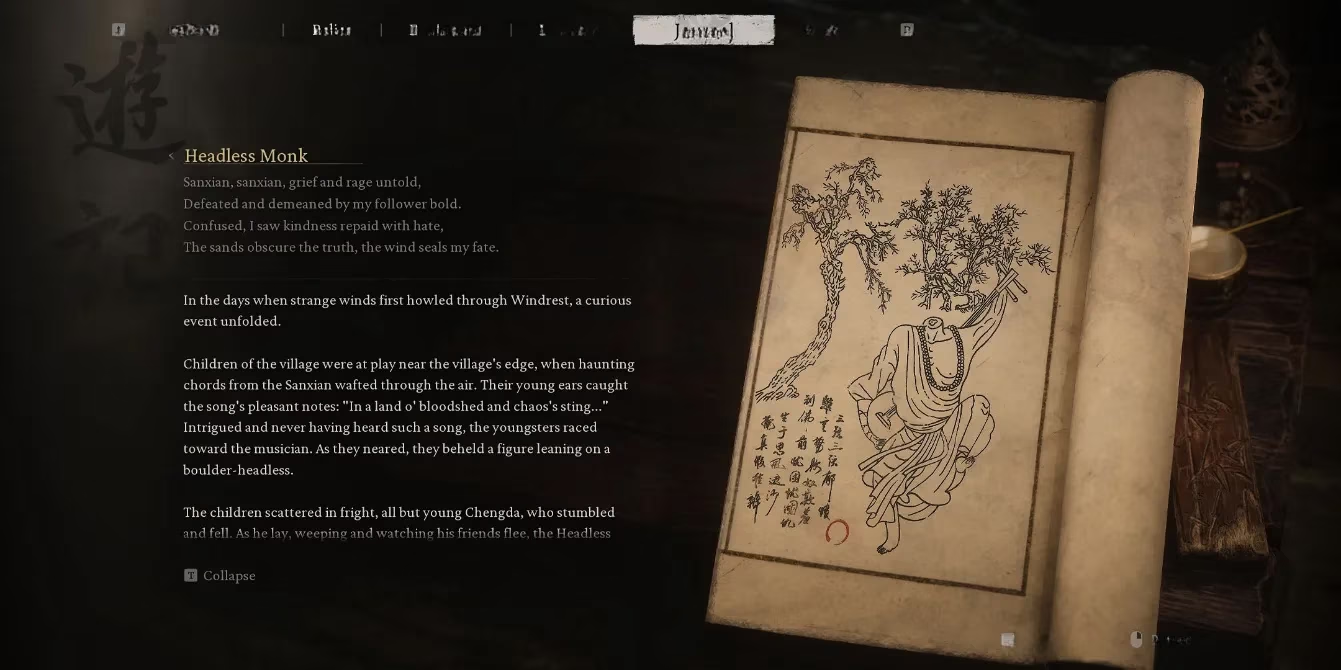
True to Black Myth: Wukong's rich world-building, the Headless Monk/Bodhisattva Lingji receives a dedicated journal entry. This entry doesn't simply recap the main story; it adds depth by recounting a separate tale of Lingji healing a young boy before vanishing into wind and sand—a story that perfectly encapsulates his benevolent yet elusive nature. Furthermore, the Yellow Wind Sage's own journal entry provides additional context, mentioning interactions with the King and Princes of the Flowing Sands and the Tiger Vanguard, sketching a broader web of relationships within the game's world.
In a game filled with memorable characters and creatures, the Headless Monk's arc stands out for its perfect blend of mystery, classic literary homage, and satisfying payoff. It demonstrates the game's strength in taking familiar elements from Journey to the West and reimagining them in fresh, engaging ways. The journey from a headless, riddle-speaking stranger to the dignified Bodhisattva Lingji is a microcosm of the game's larger themes of hidden identities, cosmic order, and redemption. For players in 2026, experiencing this narrative remains a highlight, a testament to the enduring and clever storytelling that helped define Black Myth: Wukong as a landmark action RPG. His story is a reminder that in this world, even the most bizarre and seemingly minor character may hold a divine secret, waiting for the right hero to unveil it. ✨
Leave a Comment